All industriesMSP marketing
MSP marketing that makes you the obvious choice, not one of fifty
Most managed service provider websites say the same things in the same order: proactive support, fast response, peace of mind. Buyers can't tell providers apart, so price becomes the only difference, and most MSP marketing (a monthly newsletter, a few social posts, a generic blog) does nothing to change that. We sharpen your positioning, build pages for the industries you know and the questions technical buyers ask, set up follow-up for long sales cycles, and measure the work on pipeline rather than traffic.
- 27 pages, 22 live
- A search programme for NexSys, an IT and design-technology provider for architecture, engineering and construction, live on its site since October 2026. Nine of the 27 rewrote existing pages instead of duplicating them
- Read the NexSys case study
- Since 2006
- Static Computers, a Sydney managed IT provider, repositioned around one clear promise and rebuilt as a fast, search-ready site that books free IT reviews straight into its CRM
- Read the Static Computers case study
What gets in the way
Every MSP site sounds the same
When every provider promises proactive support and a fast response, none of it helps a buyer choose. A practice manager comparing three providers ends up comparing price per seat.
Referrals plateau
Word of mouth and current clients get most MSPs to a solid base, then growth levels off. Without another reliable way to generate qualified leads, growth depends on luck and the owner's network, and the decision makers at the firms you'd most like to win never hear of you.
Technical buyers ignore generic content
IT managers and operations leads spot filler in a sentence. A blog post on "five cyber security tips" does nothing to show you understand how an architecture practice shares large model files across three offices.
Location and industry searches go to generalists
Buyers search for "IT support for architects Melbourne" or "managed IT services Parramatta". If you don't have a page for that search, a generalist with one wins the click, even if you know the industry far better. This was NexSys's position before its search programme: deep roots in architecture, engineering and construction, but location, industry and licensing searches went elsewhere.
Long sales cycles with manual follow-up
Deals take months: first call, audit, proposal, decision. When follow-up lives in someone's inbox, good opportunities go quiet and nobody notices.
What we do for IT companies
Positioning a buyer remembers
A clear statement of who you serve and why you're different, then services grouped the way buyers think about them. For Static Computers that became a results-led headline, "IT that works, from a Sydney team that answers.", and services regrouped into four buckets: Support, Protect, Cloud and Advise. We built four design directions on identical content so the team could choose by seeing, not imagining. See growth marketing and go-to-market strategy.
Vertical and city pages mapped to real searches
Every page in the plan is tied to something buyers actually search for. For NexSys we mapped 27 pages: five capital-city pages, industry pages for architecture, engineering and construction, core services, licensing guides, product comparisons, practical guides and reference pages. A buyer in that industry should feel the page was written for them, without the page turning away anyone outside it. See SEO for Sydney businesses.
Rewrite, don't duplicate
New pages that compete with your existing ones split your own rankings. Where a planned NexSys page would have competed with a live one, we rewrote the live page at its current address instead. Nine of the 27 replace pages that were already there.
Comparison and licensing guides
Plain guides on the decisions buyers wrestle with: in-house versus managed, which licence tier they need, what a migration involves. Technical buyers read these and forward them internally. For NexSys we checked every claim against the client's own site, every competitor claim against the competitor's site, and every hardware figure against the published requirements.
A fast site that moves without losing links
Static Computers' rebuild carried the old blog across at its original addresses, mapped every old address to its new page, and ran an automated check that each one redirects once, straight to a live page. Proof on the new site is real only: named client stories, real Google reviews and client logos. See web design in Sydney and web development in Sydney.
Leads into your CRM, followed up on time
A short call-back form that creates the contact in your CRM with a note and a call-back task inside business hours, tested end to end. That's how Static Computers' free IT review bookings now land. For longer cycles, follow-up sequences and agents keep each opportunity moving through audit, proposal and decision, and your team approves every significant message. See sales enablement.
Measured on pipeline, not traffic
We track which pages and campaigns lead to qualified conversations and signed clients. Changes ship against a control, such as pages left unchanged while others are rebuilt, so you can see what the work actually added. See measurement and experimentation.
Where Google Ads, email and social media fit
Search is where we start for most IT companies, because the buyers who matter search when something breaks, when a contract is up for renewal or when they're working out licensing, and the pages keep earning after they're built. It isn't the whole MSP marketing strategy, though, and we'd be wary of any IT marketing agency, generalist or specialist, that says one channel does everything.
Google Ads can bring new clients quickly for searches like "managed IT services Parramatta" or "IT support for accountants Sydney", but clicks are expensive and most searchers want a fix today, so we only run paid ads against a page that converts and judge them on qualified conversations, not clicks. See Google Ads management. Email marketing is the cheapest way to nurture leads through a six-month sales cycle and to keep current clients aware of what else you do. Social media, LinkedIn in particular, works better for showing technical expertise to decision makers who already know your name than for finding new ones. Vendor co-branded campaigns can help too, as long as they sit on your positioning rather than replacing it.
Whatever the mix, every channel is read the same way: pipeline and signed clients, against a baseline.
Where these two engagements stand
Static Computers' site is delivered and the client is moving it onto its own hosting and switching the domain over. NexSys has 22 of 27 pages live since October 2026; the remaining five, the licensing price guides and one comparison, are ready for NexSys to publish. Neither has a published result yet. When they do, it will be read against a baseline and published here.
What it costs
Each piece is priced in a written proposal before you commit.
- Positioning and a search planfrom $12,000 + GST, usually 12 weeks
- Website rebuildfrom $6,000 + GST, or from $8,000 + GST for a large page set like NexSys's
- CRM connectionfrom $10,000 + GST
- Ongoing SEOfrom $2,000 + GST a month
For market rates, read SEO cost in Australia and website cost in Australia.
Services
Client work
NexSys
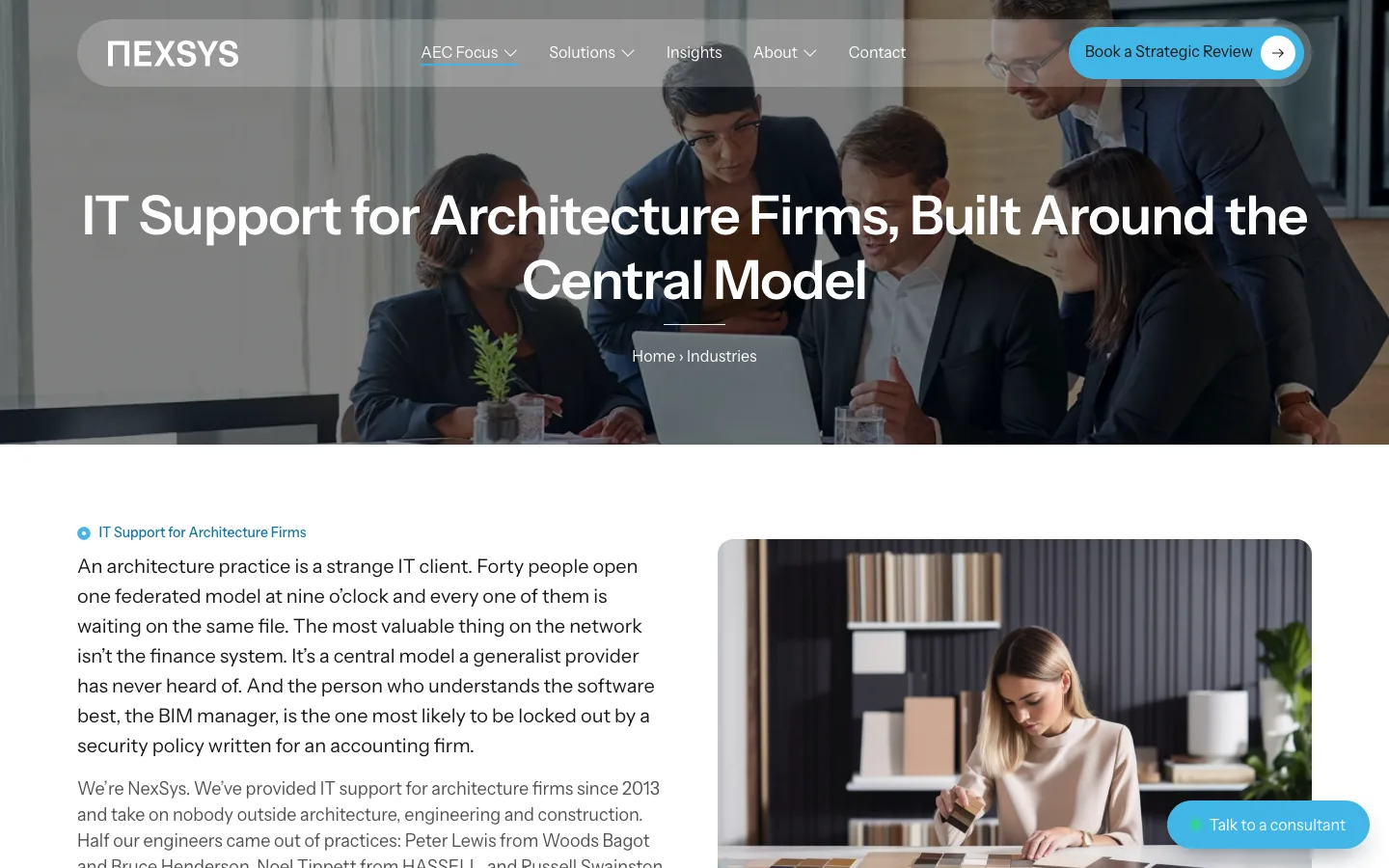
NexSys provides IT support and design technology to architecture, engineering and construction firms across Australia and Asia Pacific. We planned and wrote a 27-page search programme to position it as the IT partner built for that industry, so an architecture practice searching for IT support for architects finds a page written for it. 22 of the 27 pages have been live on nexsysit.com.au since October 2026, and nine of the 27 rewrote pages that already existed instead of adding duplicates that would compete with them.View case study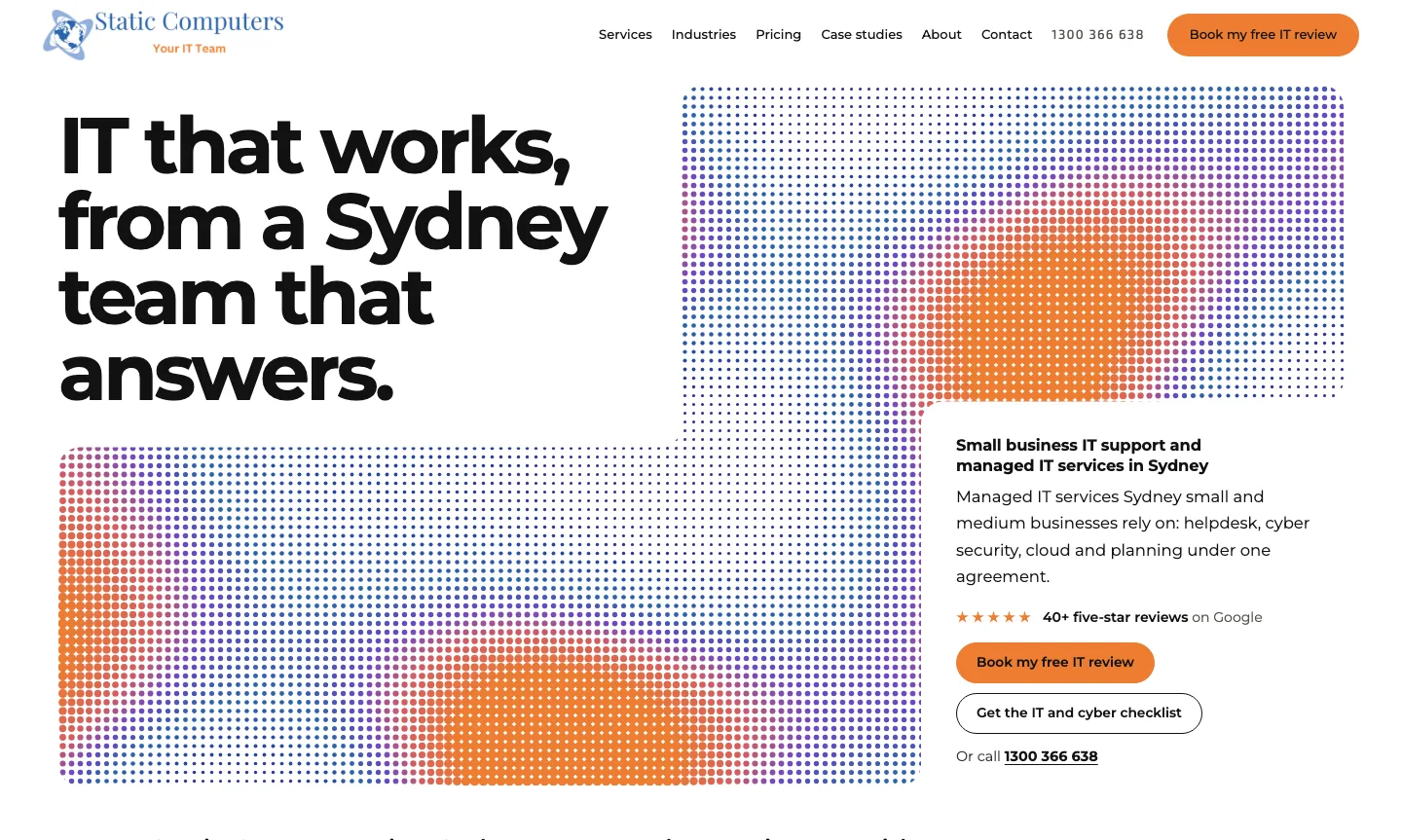
Static Computers
A new position, a search-ready site and enquiries that land in the CRM. Static Computers has run IT for Sydney businesses since 2006. We repositioned it around one promise, "IT that works, from a Sydney team that answers.", regrouped its services into four buckets, and rebuilt the site with service, industry and location pages, every old address redirected, and a call-back form that creates the contact and a task in its CRM. The site is delivered and launching on the client's domain. There are no measured results yet; we'll publish them once the site has been live long enough to read.View case study
Questions
How much does an MSP marketing agency cost?
A positioning and search plan starts at $12,000 + GST. A rebuild starts at $6,000 + GST and ongoing SEO at $2,000 + GST a month. The written proposal sets out the full cost and the result we expect before you commit.
What's different about your approach to MSP marketing?
We start with positioning, because most MSP sites are interchangeable. Then we build a page plan mapped to real searches, write for technical buyers, connect follow-up to your CRM, and measure on pipeline against a control.
Have you worked with IT companies before?
Yes. We repositioned and rebuilt Static Computers, a Sydney managed IT provider since 2006. For NexSys, which supports architecture, engineering and construction firms, we built a 27-page search programme with 22 pages live since October 2026.
Should an MSP use Google Ads, email or social media?
Google Ads can work for high-intent local searches if the ads land on a page built to convert and you judge them on qualified conversations. Email suits nurturing leads through long sales cycles and keeping current clients informed. Social media helps show technical expertise to people who already know you. We'd fix positioning and search pages first, because every other channel sends people to them.
Should an MSP focus on a vertical?
Usually it helps. Vertical pages let you speak to the systems, compliance needs and working patterns of a specific industry, which generic content can't. You don't have to turn other clients away; you give your strongest markets a page that speaks to them.
How do you approach MSP lead generation?
We focus on buyers already looking: people searching for managed services in their city, comparing support models or working out licensing. Those enquiries land in your CRM with a call-back task, so long sales cycles don't lose deals to silence.
What role do AI agents play?
Agents handle routine work such as drafting follow-ups, publishing planned pages and checking that they went live correctly, through machine.work, our own platform. Your team approves every significant action, and nothing goes out in your name without sign-off.
Do we keep ownership of the site and content?
Yes. The site, content, accounts and data are set up in your name. NexSys received a hand-off pack with the address, title, description and body for each page, ready to publish on its existing site.