All servicesBuild · AI consulting and AI agents, Sydney
AI consulting and custom AI agents that do real work
We build AI agents for specific jobs in your business: drafting quotes, booking appointments, researching prospects, raising invoices, publishing and fixing web pages. Each one connects to the systems you already use. Your team decides what it may do alone and what it must ask about first, and nothing reaches a customer without the safeguards you set.
One lead a week from AI search for Tarino, with agents doing the publishing and a sales agent drafting outreach for the team to approve. Read the Tarino case study
- 4 → 23 articles in three weeks
- , published by agents on High Demand Electrical’s site and each checked on the live site. The same business’s cost per booked job fell from about $1,000 on Google Search ads to $40 (measured over 8 weeks against the previous 8)
- Read the High Demand Electrical case study
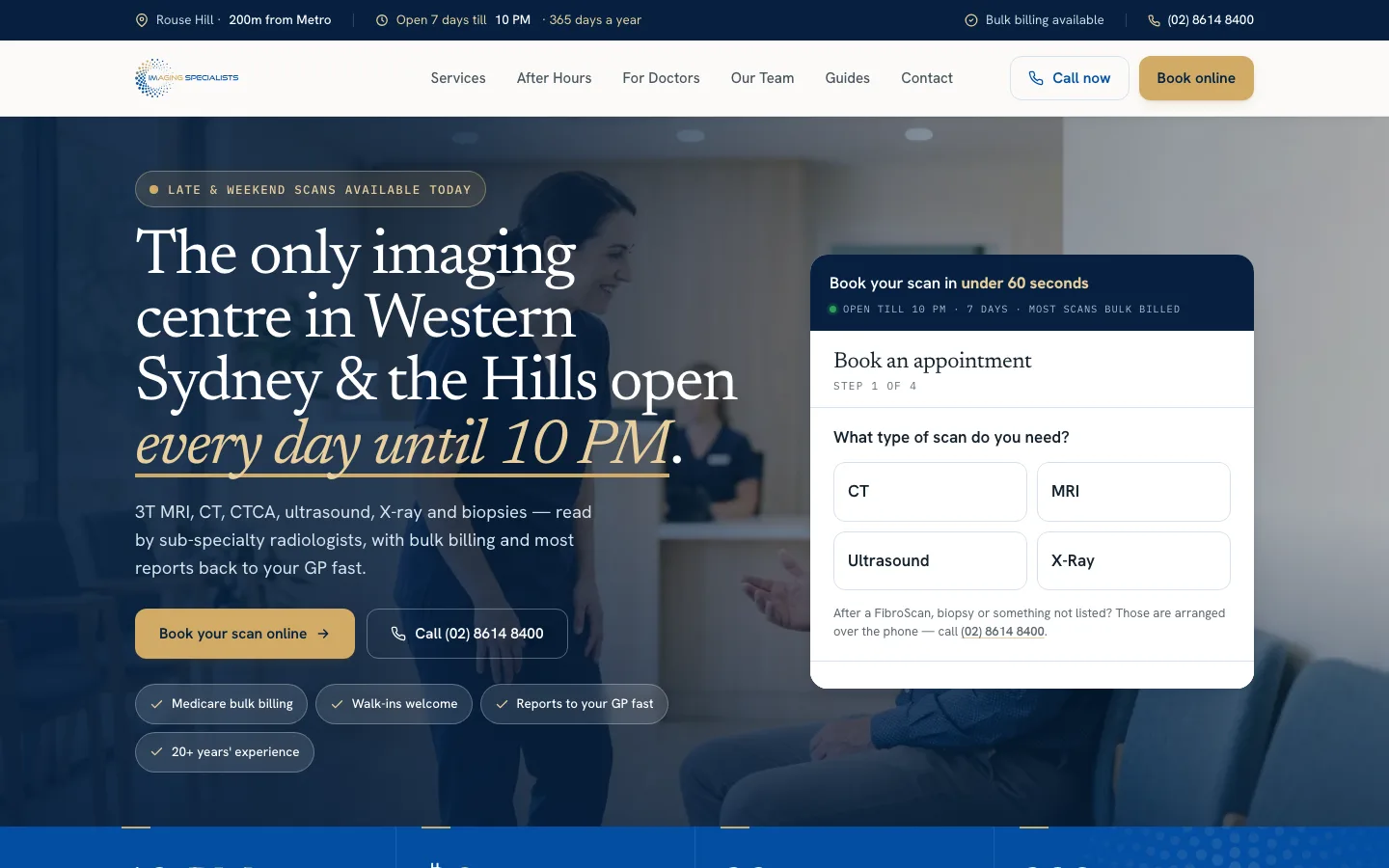
- 69 exams bookable online
- through a booking engine connected to Imaging Specialists’ clinical system
- Read the Imaging Specialists case study
What AI consulting services should get you
A lot of AI consulting ends with a slide deck of "use cases" and an AI strategy nobody owns, which doesn't take a single task off anyone's desk. What you need is one workflow where an AI agent saves real hours or recovers real revenue, built properly into your existing systems, and a measure of whether it did. Good AI consulting services cover the AI strategy, the implementation and the technical support after launch, and tie each AI initiative to a business goal you can count.
So our AI consulting starts with your week: where do the hours go? It's usually quotes typed up at 9 pm, missed calls from patients trying to book, leads that wait two days for a reply, or job notes re-keyed from one system into another. We pick the one with the clearest payback, build an agent for it, and measure it against how the same work went before.
Why we start with one workflow, not an AI transformation
Generative AI is good at reading messy requests and drafting a reply, and poor at being trusted with everything at once. AI adoption is mostly change management, and it goes better when your team watches one agent do one job well for a few weeks and sees the time come back. A big-bang AI transformation asks people to trust a system they haven't seen work, which is usually where AI initiatives stall.
What our AI consultants look at first
Our AI consultants, who also build the agents, map the business processes around the job: who receives the request, which system it lands in, and where a person has to make a call. Most of the efficiency comes from connecting to systems you already run.
AI agents for business we've built
An AI quoting agent for an electrical contractor
A Sydney Level 2 electrical contractor takes most of its work through group chats with customers. Every quote request had to be noticed, priced and written by hand, often while the team was on site.
The agent joins the existing chats on its own number and flags anything that looks like a quote request. It works out the job type (switchboard, EV charger, lighting, fault-finding) and the line items. Prices come from a fixed engine that reads the business's own rate card, adds the compliance and network lines and applies GST. The AI never sets a price, so the same job always gets the same quote. Each draft becomes a branded PDF in a private approvals chat, where the team replies "send", "ignore" or a change like "add two downlights". The agent never messages a customer on its own.
Status: built and tested end to end, ready to go live on a dedicated number. Read the quoting agent case study
An AI admin assistant for trade businesses
Most small trade businesses have no office staff. The owner quotes, invoices and chases payments at night from a phone. This assistant runs by text message. The owner texts it in plain words, photos, voice notes or PDFs, and it writes and sends quotes, raises invoices with a pay link, books jobs and keeps the job system current.
Every action has a setting: never, draft only, ask first or just do it. Trust grows in five stages as the owner approves its work, sensitive actions need a four-digit code, and one text switches everything off. Status: built and tested against 18 scenarios, with live connections being tested. Read the admin assistant case study
An AI receptionist and booking for an imaging practice
For Imaging Specialists we built online booking connected to the clinical system, a phone booking agent (an AI receptionist, in effect) for the calls reception misses, and a reception desk with an action queue for confirm calls, referral chases and no-show rebooks.
The phone agent never gives clinical advice and hands urgent or distressed callers to a person. The clinical system holds live patient records with no test copy, so everything had to be safe against it from day one.
Growth agents and a sales agent
High Demand Electrical and Tarino run their search growth through machine.work, our own platform. Agents publish articles, rewrite titles and descriptions, add internal links and fix image text, within quality checks, and every change is re-read on the live site to confirm it saved. Tarino also has a sales agent that researches each account, backs every personal detail with a quote from a public page, drafts short outreach and waits for the team to approve every message.
Who it's for
- Owner-operated businesses where admin eats the evenings. Trades, clinics, brokers, small professional firms.
- Teams losing enquiries to missed calls and slow follow-up.
- Businesses that tried off-the-shelf AI solutions and found them too generic to trust with customers.
- Companies with a clear, repeated workflow (quotes, bookings, follow-ups, publishing) that runs the same way every week.
It suits you less if the workflow changes every time or depends on judgement nobody has written down. We'd help you document it first.
What's included
AI consulting and workflow selection
A short engagement to map where the hours go and pick the workflow worth automating first, with the expected saving or revenue written down.
Agent design and build
The agent itself, built for one job, using your rules and data: your rate card, your service list, your tone of voice, your exam catalogue.
Integration with your existing systems
Connected to your CRM, job management, scheduling, accounting or practice system. Read-only wherever that's enough; write access only where the agent needs it, and logged.
Guardrails, approval and human in the loop
Approval steps, audit trails, staff sign-in, a kill switch and clear limits on what the agent may say or do. Sensitive topics (clinical, legal, pricing outside the rules) always go to a person.
This is the practical side of responsible AI and AI governance for a small business: a written list of what the agent may do alone, what it must ask about, and who gets told when something looks wrong, so the risk management sits in the system and not in somebody's memory.
Supervision and handover
At launch a person reviews the agent's work, and it earns more autonomy as the approval record builds. You get a daily or weekly digest of what it did, and your internal team learns to change its rules.
How it runs
- 30-minute diagnostic call. Where the time goes, and which workflow looks worth automating.
- Written proposal. The agent's job, the expected saving or revenue, how it will be measured and the cost.
- Map the systems. How the work happens today and what the agent must connect to, tested safely against your real data.
- Baseline. How long the work takes now, how many requests wait, how many calls go unanswered.
- Build and supervise. Launch with approval on every action until the agent has earned more.
- Measure and extend. Read what changed against the baseline, then move to the next workflow.
How we measure an agent
An agent is judged on the business outcome it's there for: quotes sent, time from request to quote, bookings made, calls answered, hours of admin removed, leads followed up. Wherever we can, it's compared with how the same work went before, or with a group of jobs it didn't touch.
"It feels faster" isn't a result. If the numbers don't move, the readout says so and we fix the agent or switch it off.
What our AI consulting costs
AI work is priced as a fixed-scope project, then an optional monthly run fee.
- AI consulting to pick the first workflowquoted in the written proposal, usually as part of a strategy engagement from $12,000 + GST
- Connecting an agent to your booking system or CRMfrom $10,000 + GST
- The agent build itselfQuoted in the written proposal, because scope depends on the job and the systems
- Agents running ongoing growth workfrom $5,000 + GST a month
For a plain-English look at one common type of agent, read our guide to AI receptionists.
Client work
Imaging Specialists
Conversion rate up 10×, from 0.1% to 1%. After we restructured and redesigned the booking and enquiry forms, ten times as many visitors to Imaging Specialists turned into bookings and enquiries, measured over 8 weeks against the previous 8. Over the same period, non-branded search clicks grew from zero to seven a day, so patients now find the practice without already knowing its name. Patients can book 69 exams online, straight into the practice's clinical system.View case study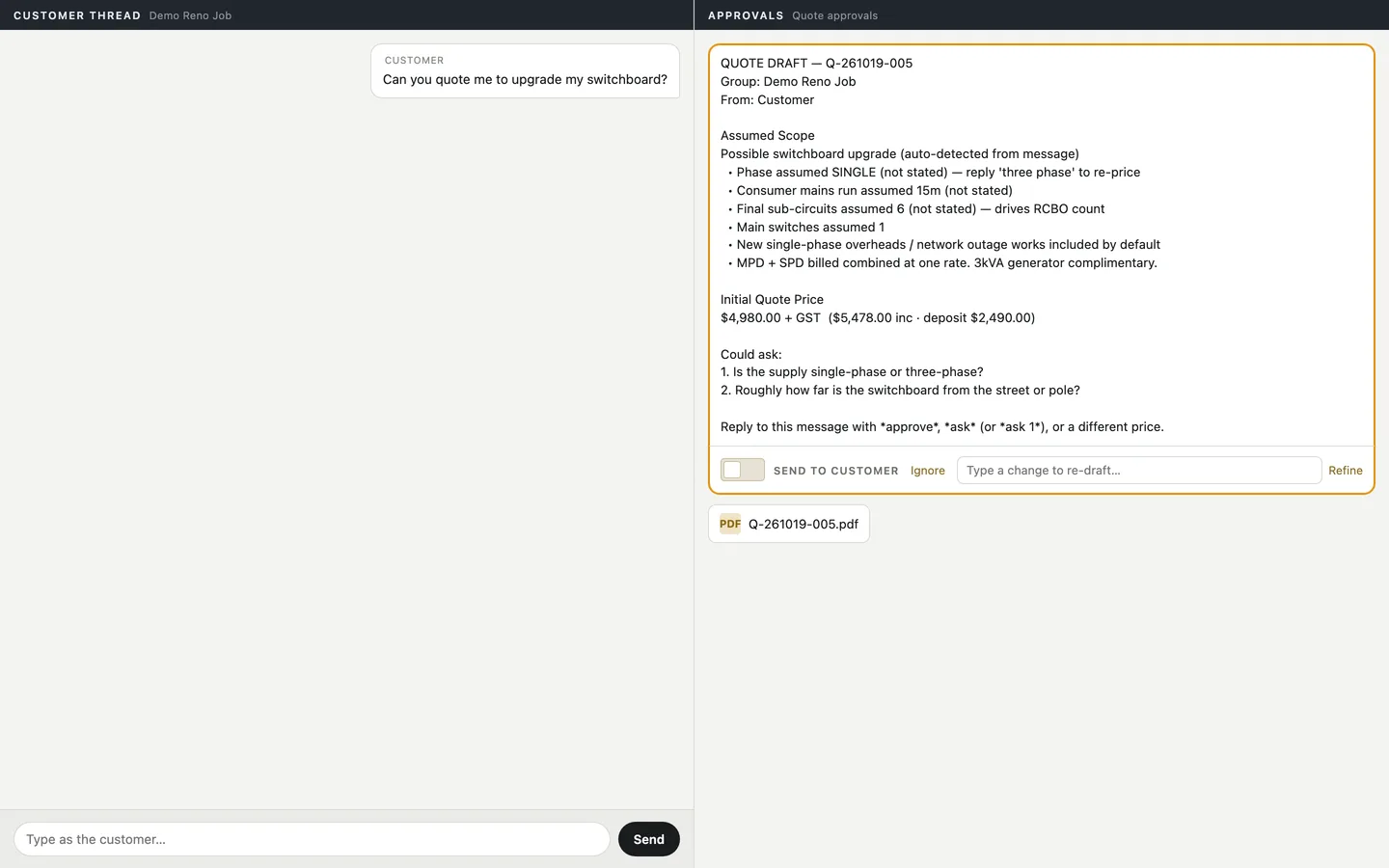
AI quoting agent for an electrical contractor
We built an AI agent that sits in a Sydney electrician's customer chats, spots quote requests, prices each job from the business's own rate card and drafts a branded PDF quote, which the team approves before a customer sees it. It is built and tested end to end and paused for now, ready to go live on a dedicated number, so there is no measured result yet.View case study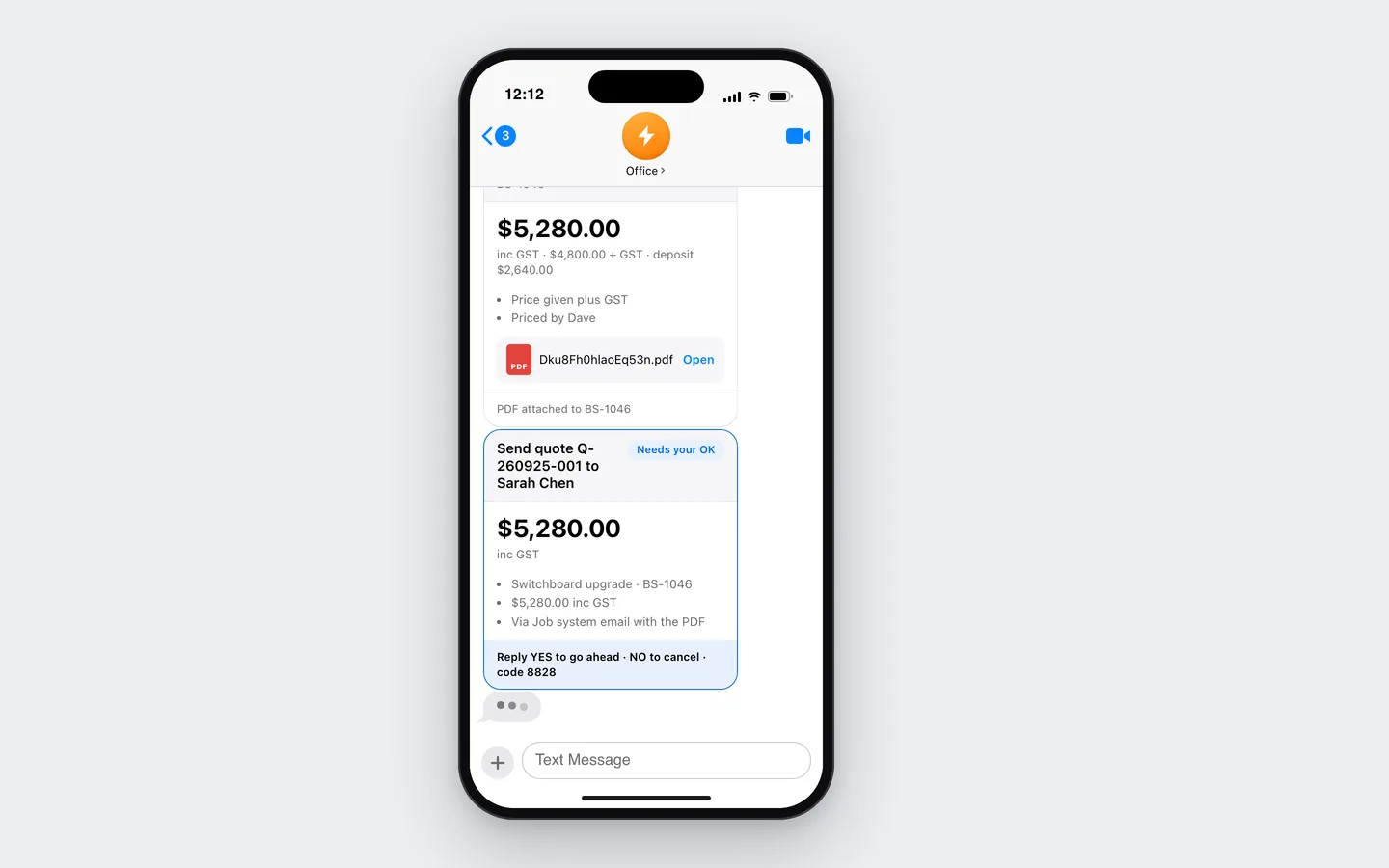
AI admin assistant for trade businesses
We built an AI office manager for Australian trade businesses that the owner runs by text. It writes and sends quotes, raises invoices, books jobs and keeps the job system up to date, and it asks before anything goes out. It has been built and tested against 18 scenarios, and its live connections to job and accounting systems are being tested now. There is no measured result yet.View case study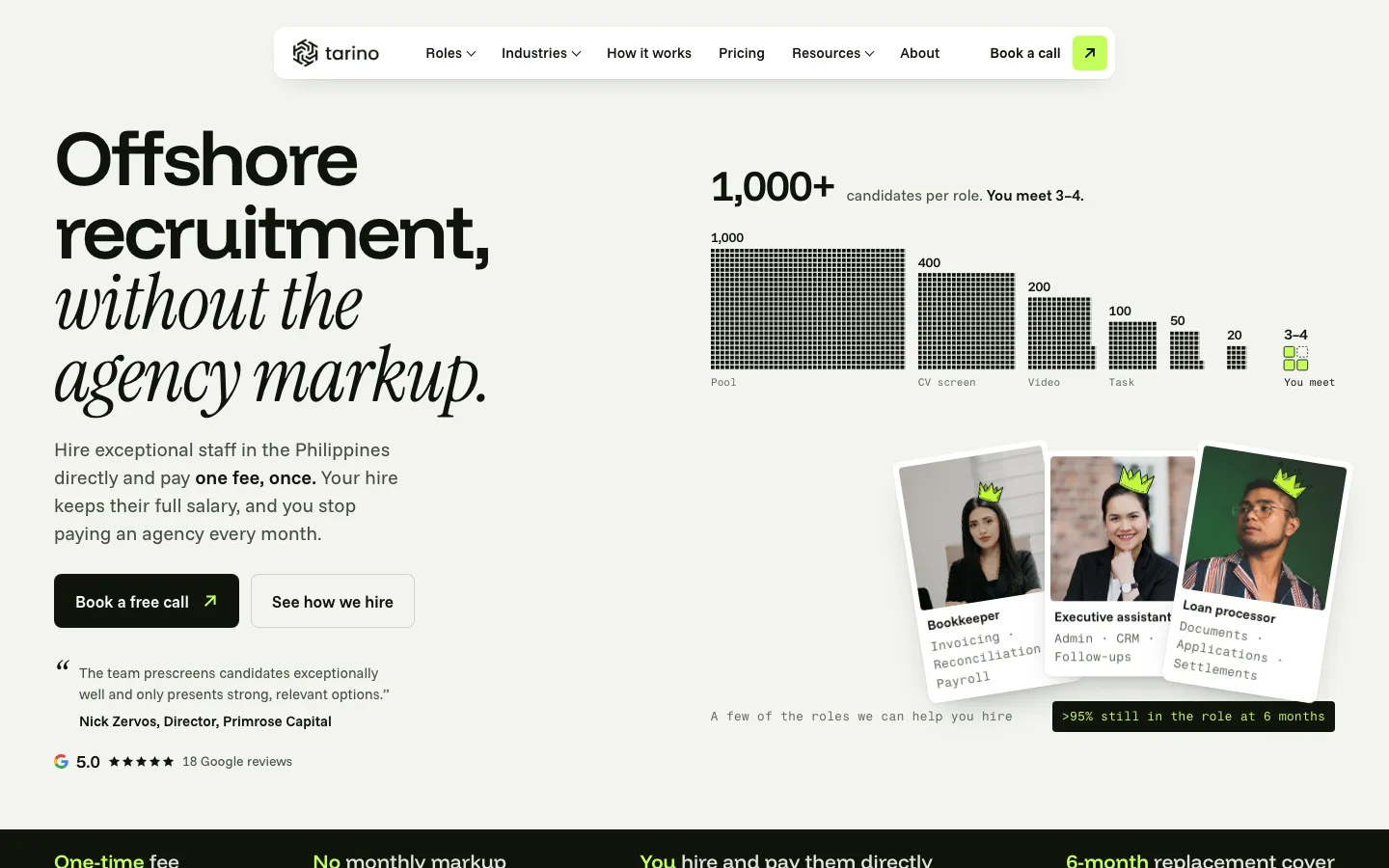
Tarino
Tarino is an offshore recruitment business that helps Australian small businesses hire offshore staff directly, without the agency markup. Its AI search programme, run day to day by agents, now brings in one lead a week. Around it we built a new search-led website on a plan of about 40 pages, a cost calculator, a brand kit and an AI sales agent that drafts outreach for the team to approve. The AI search programme is live and ongoing; the new website is built and launching, and the sales agent is launching.View case study
High Demand Electrical
High Demand Electrical is a busy Level 2 electrical business in Sydney. Its Google Search ads were costing about $1,000 for every booked job; that figure is now $40, measured over 8 weeks against the previous 8. Over the same period the enquiry and booking forms, once restructured and redesigned, lifted the conversion rate 10×, from 0.2% to 2%, and the blog went from 4 articles to 23 in three weeks, every one published by AI agents and checked on the live website. This is electrician marketing run as one programme, with SEO, Google Ads and the site all judged on booked jobs.View case study
Questions
How much does AI consulting cost?
A short AI consulting engagement to find the first workflow is quoted in the written proposal and often sits inside a strategy engagement from $12,000 + GST. The agent build is a fixed price in the same proposal, integrations start at $10,000 + GST, and agents that run ongoing growth work start at $5,000 + GST a month.
Will an AI agent talk to our customers unsupervised?
Only where you decide it should. The quoting agent never messages a customer without a "send" from the team. Most agents start with a person approving every action, and clinical, legal or sensitive questions always go to a human.
Where does our data go?
We keep data in Australia where possible, encrypt what we store, and connect read-only wherever an agent doesn't need to write. Each business's data is kept separate.
Are you an AI agency in Sydney?
Yes. We're a Sydney AI consulting and automation business. The first call is 30 minutes, with the AI consultant who would build the agent.
Can AI set our prices?
We don't let it. In the quoting work, prices come from a fixed engine reading your own rate card. The AI reads the request and drafts the quote; the rules set the number.
Can you build an AI sales agent?
Yes. Tarino's sales agent researches accounts, cites a public source for every personal detail, drafts outreach and books meetings, with the team approving every message. See sales enablement.
Do we own the agent?
Yes. You own everything built for your business: the agent's rules and prompts, your data, your accounts and the records of what it did.
How is this different from an AI automation agency?
Many automation agencies connect apps with off-the-shelf workflows. We do that kind of business automation where it's enough, but most of our work is agents that read, decide and draft, with approval steps, and every one is measured against how the work went before.
Do we need machine learning or a data science team?
No. Our agents use generative AI to read and draft, and fixed rules for anything that must be exact, like prices. You don't need data scientists on staff, just someone who knows the work and can approve drafts early on.