All servicesStrategy · Growth marketing agency, Sydney
Growth marketing agency, Sydney: a plan you can be held to
We work out where your next customers will come from, which channels and systems will bring them in, and what to fix first. Every recommendation comes with the result we expect it to cause, written down before anything ships. Then we test it against a control, so you know whether it worked.
Most growth plans are a slide deck and a hopeful forecast. Ours is a list of moves, each with an owner, a cost, an expected result and a way to check it. If you want a starting template, our marketing plan template has the same columns, including the control for each move.
[Book a 30-minute diagnostic call →]
- $1,000 → $40
- cost per booked job for a Sydney Level 2 electrician, measured over 8 weeks against the previous 8
- High Demand Electrical case study
- 0 → 100+
- mentions a day in Google’s AI answers for a West Pymble mortgage broker, bringing two leads a week
- FinSavvy case study
- 10×
- conversion rate after the forms were restructured and redesigned: 0.1% to 1% at a Rouse Hill imaging practice, 0.2% to 2% at the electrician
- Imaging Specialists case study
- +35%
- year-on-year new-customer growth, with a 15% lower customer acquisition cost, after rebuilding attribution. Founder track record, before CGS · online services marketplace
What a growth marketing agency actually does
A digital marketing agency sells channels. You buy a set number of SEO hours, a managed Google Ads account, a social calendar or a new website, and each one reports on itself.
A growth marketing agency starts somewhere else: the number you need to move. More booked jobs. Lower cost per lead. A new region paying for itself inside a year. From there it decides which channels deserve the budget, which pages and systems need rebuilding, and in what order. Then it tests whether each move did what it was meant to.
That last step is where most agencies stop short. A campaign goes live, enquiries rise, and everyone takes the credit. But a roofer's enquiries also rise after the first big storm of spring, a broker's rise after a rate cut, and an electrician's rise when a competitor shuts up shop. Without a comparison group you can't tell which.
We run every change against a control. Pages left unchanged. A holdout region. A group of customers who don't see the new offer. The gap between the two groups is what the change caused, and that's the only number we'll put in a readout.
Who it's for
- Established businesses whose growth has stalled or become expensive. Cost per lead has crept up, the same channels are delivering less, and nobody can say why.
- Leadership teams choosing between several big bets. A new service line, a second location, a website rebuild, a bigger ad budget. You can't afford all of them this year.
- Businesses about to rebuild their website, systems or marketing. You want the order right before money goes out the door.
- Owners who've been burnt by agency reports. Every month looked green, but the bank balance didn't agree.
It's a poor fit if you don't yet have a clear offer, or if there's no one to answer enquiries when they arrive. Fix those first. We'll tell you on the call if that's where you are.
What's included
A growth diagnostic
How you win customers today, where enquiries leak, and what each channel really returns. We read your own past results to see what has worked for you, rather than what worked for someone else's client. For a trade business that might mean pulling six months of booked jobs from the job management system and lining them up against ad spend by week.
A channel mix
Which channels to grow, hold or cut, and what each is expected to deliver: SEO and AI search, Google Ads, Meta ads, referrals, partnerships, email. The mix is set from your numbers, not from what a platform's dashboard says it drove.
A rebuild map
For businesses that need more than marketing: the website, booking flow, CRM and admin processes to replace, in the order that pays back first. At Imaging Specialists the booking and enquiry forms came early, because conversion was 0.1%. Restructured and redesigned, it reached 1%, measured over 8 weeks against the previous 8.
Expected results for every move
Each major recommendation carries the result we expect, from our model, before anything ships. That gives you a way to hold the plan (and us) to account.
A 90-day plan
The first moves, who owns them, what they cost and how we'll know they worked. Week by week, not quarter by quarter: week 2, the forms go live against the old version; week 5, the first ten suburb pages ship with ten left unchanged as the control.
How it runs
- Listen. Interviews with your leadership and the people closest to customers: reception, sales, the person who answers the phone at 7 am. We also get access to your numbers.
- Baseline. We measure where you are before recommending anything. Enquiries, booked jobs, cost per lead, conversion rate by page.
- Plan. Options, trade-offs and a recommended path, each one tested against a simulation of your market first.
- Hand over or carry on. You take the plan in-house, or we build and run it with you. AI agents do the day-to-day work through machine.work, our own platform, and your team approves every action.
How we measure it
A strategy is judged by what it causes. Each recommendation carries an expected result. Once work ships, we read it against a baseline or a control, and the plan is updated by evidence rather than opinion. Where a control isn't possible, we say so in the readout.
You get a regular readout covering what shipped, what we expected, what actually happened, and what we'll do next.
Worked example: a Sydney electrician
High Demand Electrical is a Level 2 electrician in Sydney, busy with emergencies, switchboards, EV chargers and metering. Google Search ads were costing about $1,000 per booked job. A big part of the answer sat on the website, not in the ad account.
Conversion on the enquiry and booking forms was 0.2%. We restructured and redesigned them, and conversion rose to 2%. Paid search and social were planned around the same jobs and areas as the search programme and judged on booked jobs, not clicks. Agents grew the blog from 4 to 23 articles in three weeks, each one checked on the live site. Cost per booked job came down to $40. Both figures were measured over 8 weeks against the previous 8. Read the full case study.
The lesson carries to most service businesses. When cost per lead is high, the cheapest fix is often on your own site, not in the ad account.
Other client work
- Static Computers. A Sydney managed IT provider since 2006, repositioned around one promise and four service groups (Support, Protect, Cloud, Advise), and rebuilt as a fast, search-ready site.
- FinSavvy. A mortgage broker in West Pymble, rebuilt from a one-page site into a search-led advice library. It went from never mentioned in Google's AI answers to 100+ mentions a day, bringing two leads a week.
- Sam's Roofing Experts. Rebuilt from four pages into a 130-page search-led site with real job photos and published price ranges.
- NexSys. IT for architecture, engineering and construction. A 27-page search programme, 22 pages live, where nine rewrote existing pages instead of duplicating them.
What a growth strategy engagement costs
A growth strategy engagement starts at $12,000 + GST and typically runs 12 weeks. If you'd like us to carry the plan into build and ongoing growth, monthly work starts at $5,000 + GST a month. Ad spend is paid to Google or Meta directly, from accounts in your name, and our ads fee is flat, never a percentage of spend.
The proposal sets out scope, the expected result, how it will be measured and the full cost before any work begins. If you need a senior person to own marketing on an ongoing basis, compare this with a fractional CMO, and see what a fractional CMO costs in Australia for market rates.
How to choose a growth marketing agency in Sydney
Ask any agency you're considering these questions. The answers sort them quickly.
- What result do you expect, and by when? If they won't write it down, they don't expect to be held to it.
- How will you know your work caused it? "The dashboard went up" isn't an answer. Ask about control groups, holdouts or before-and-after periods of equal length.
- Who owns the accounts and the site? You should. Ad accounts, analytics, domain, content and data in your name.
- Who will do the work? Find out whether the strategist you meet is the person running your account.
- What will you tell us to stop doing? A good growth agency cuts spend as often as it adds it.
Client work
High Demand Electrical
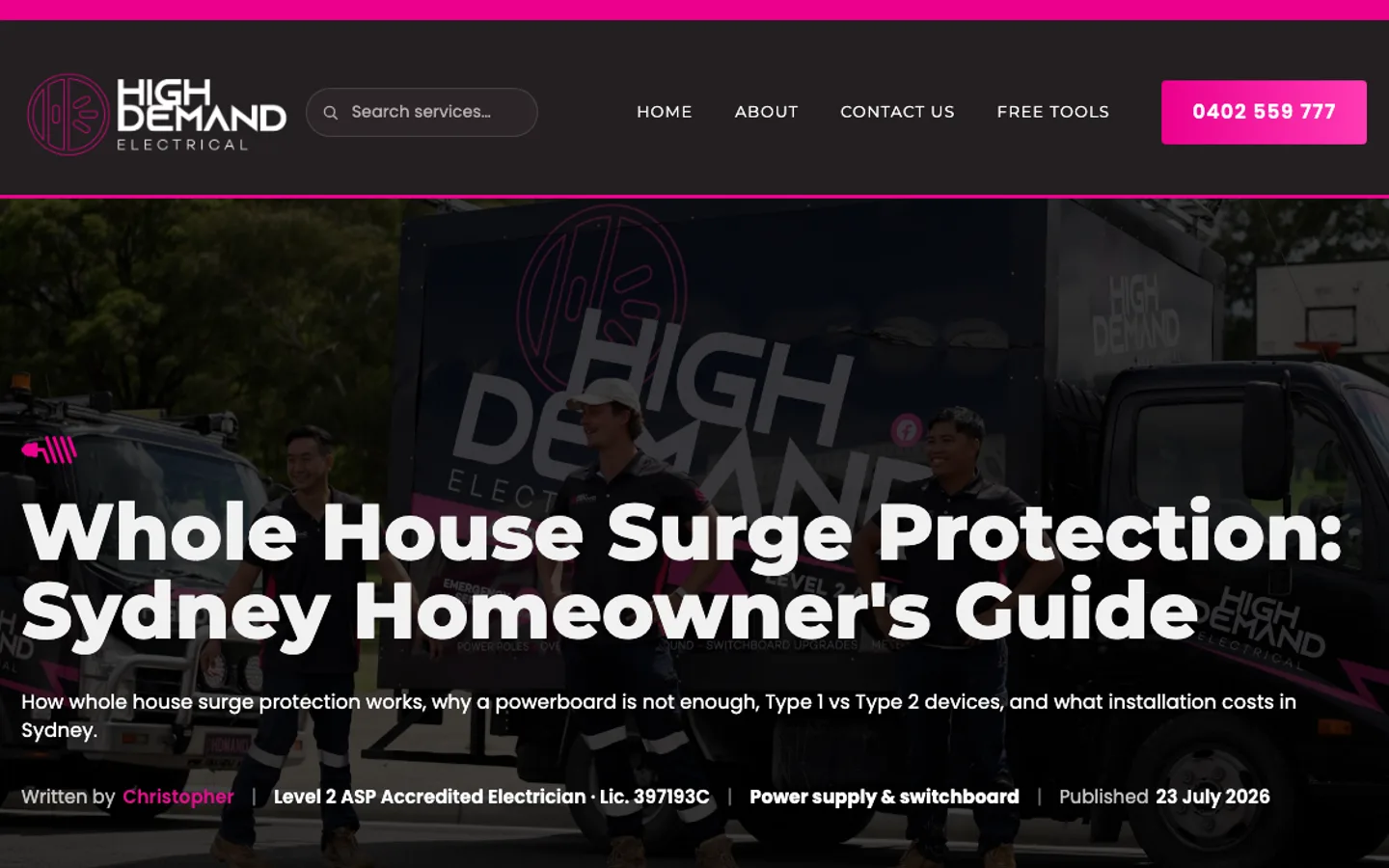
High Demand Electrical is a busy Level 2 electrical business in Sydney. Its Google Search ads were costing about $1,000 for every booked job; that figure is now $40, measured over 8 weeks against the previous 8. Over the same period the enquiry and booking forms, once restructured and redesigned, lifted the conversion rate 10×, from 0.2% to 2%, and the blog went from 4 articles to 23 in three weeks, every one published by AI agents and checked on the live website. This is electrician marketing run as one programme, with SEO, Google Ads and the site all judged on booked jobs.View case study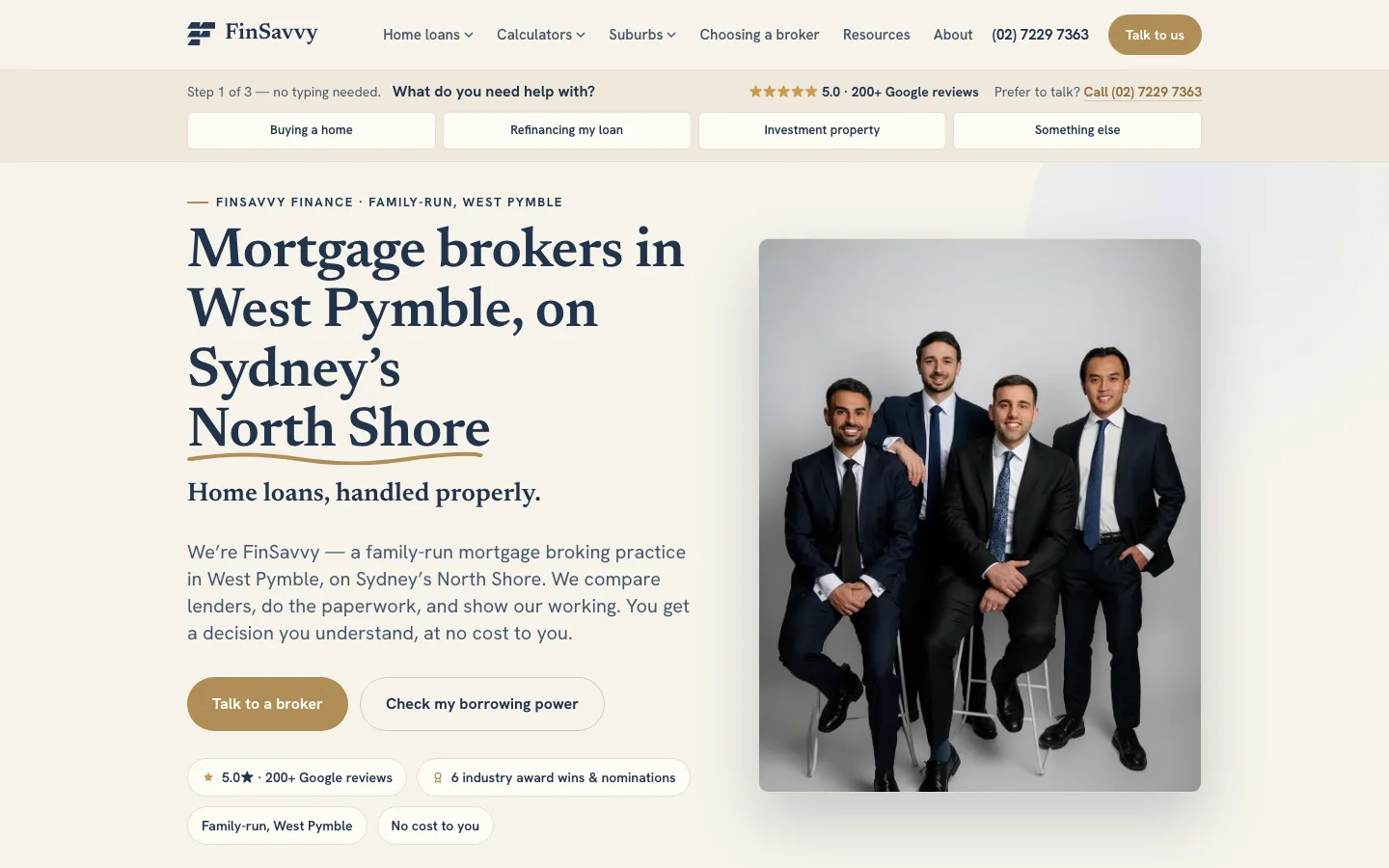
FinSavvy
From never mentioned to 100+ mentions a day in Google's AI results. FinSavvy, a family-run mortgage broker on Sydney's North Shore, now appears in more than 100 Google AI answers a day, and an estimated 300+ a day across all AI assistants. That brings in two leads a week from AI search. The mortgage broker website behind it was a single page before we rebuilt it as a search-led advice library. If you run a mortgage or finance broking business in Australia, this shows what we built and what it changed for lead generation.View case study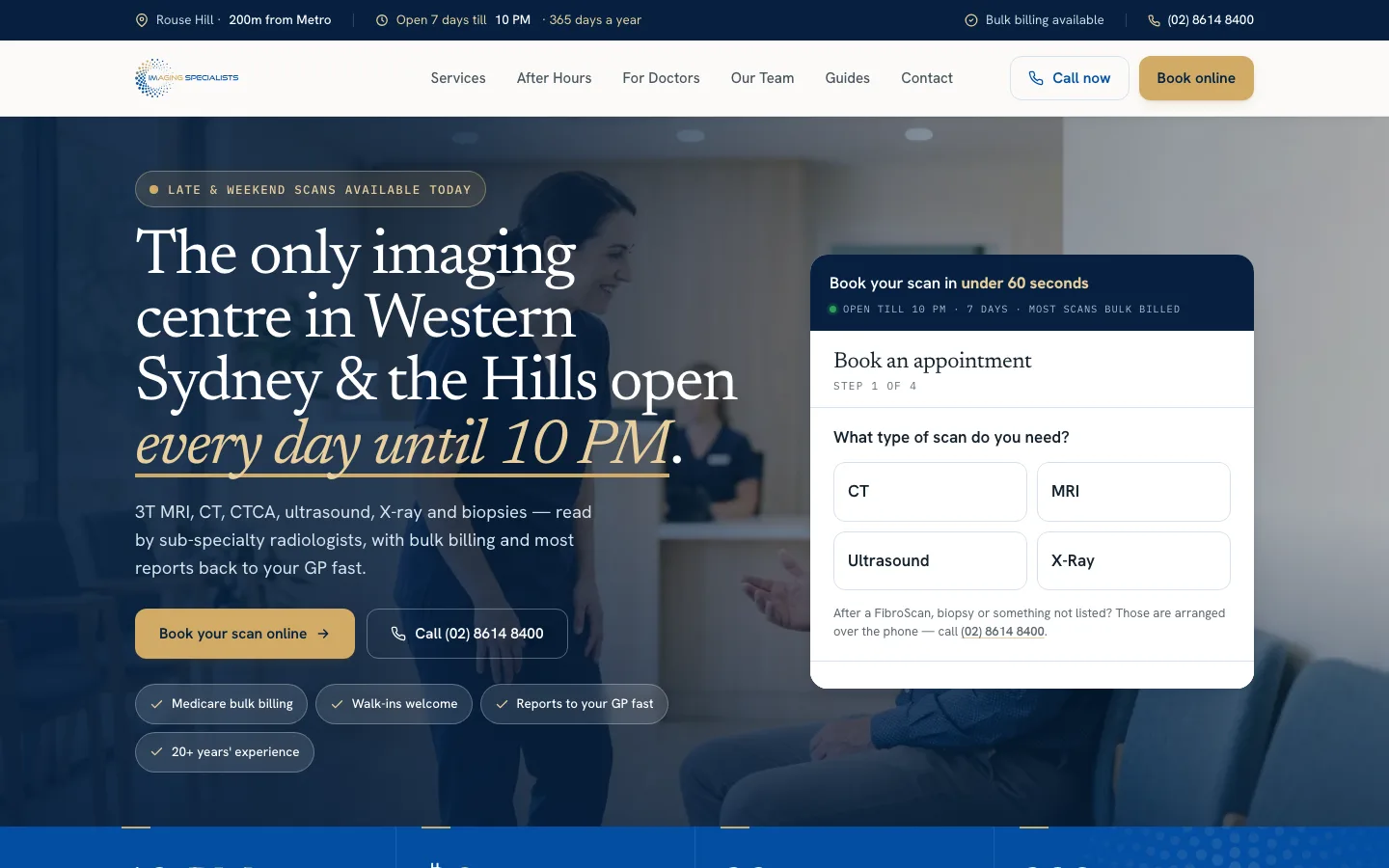
Imaging Specialists
Conversion rate up 10×, from 0.1% to 1%. After we restructured and redesigned the booking and enquiry forms, ten times as many visitors to Imaging Specialists turned into bookings and enquiries, measured over 8 weeks against the previous 8. Over the same period, non-branded search clicks grew from zero to seven a day, so patients now find the practice without already knowing its name. Patients can book 69 exams online, straight into the practice's clinical system.View case study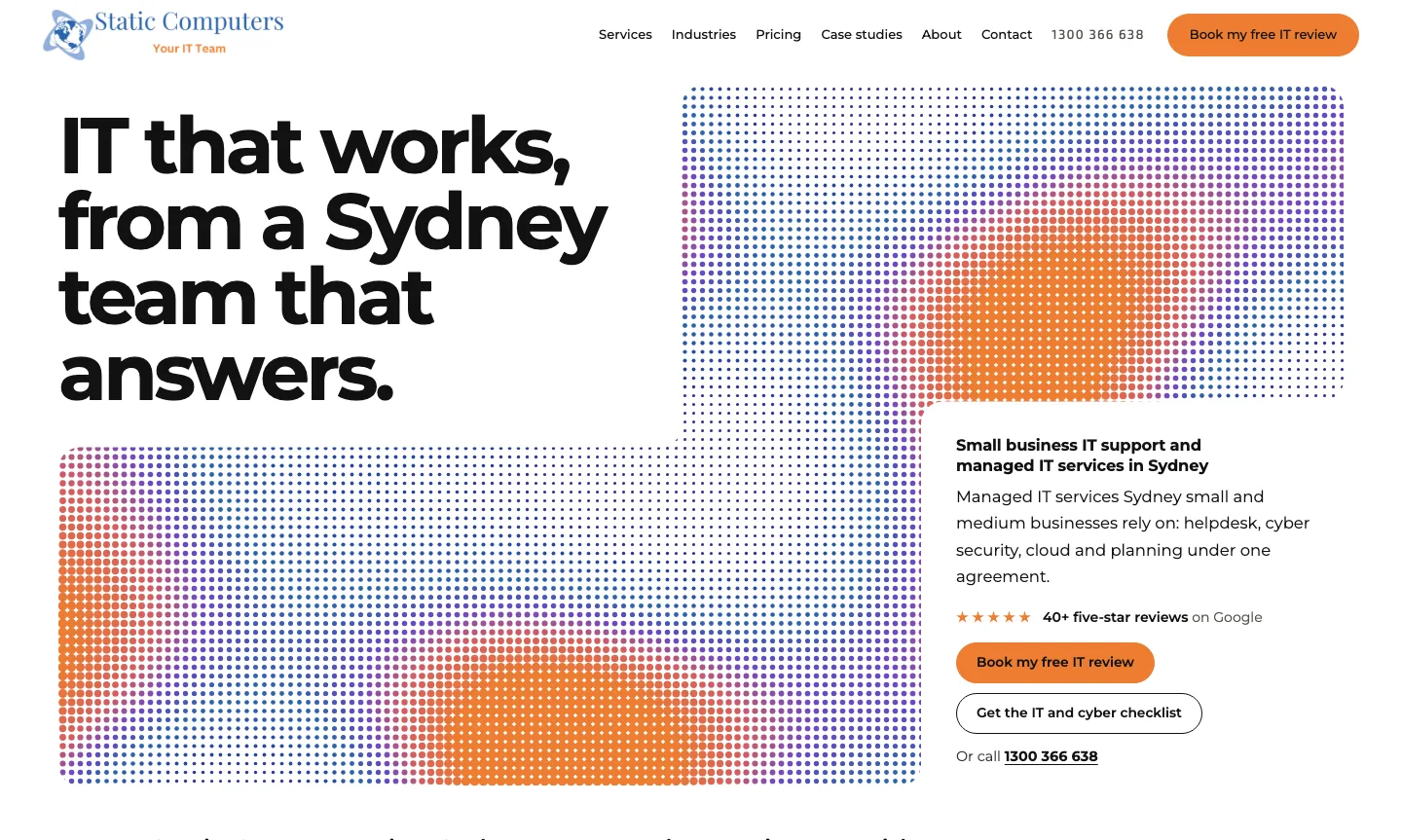
Static Computers
A new position, a search-ready site and enquiries that land in the CRM. Static Computers has run IT for Sydney businesses since 2006. We repositioned it around one promise, "IT that works, from a Sydney team that answers.", regrouped its services into four buckets, and rebuilt the site with service, industry and location pages, every old address redirected, and a call-back form that creates the contact and a task in its CRM. The site is delivered and launching on the client's domain. There are no measured results yet; we'll publish them once the site has been live long enough to read.View case study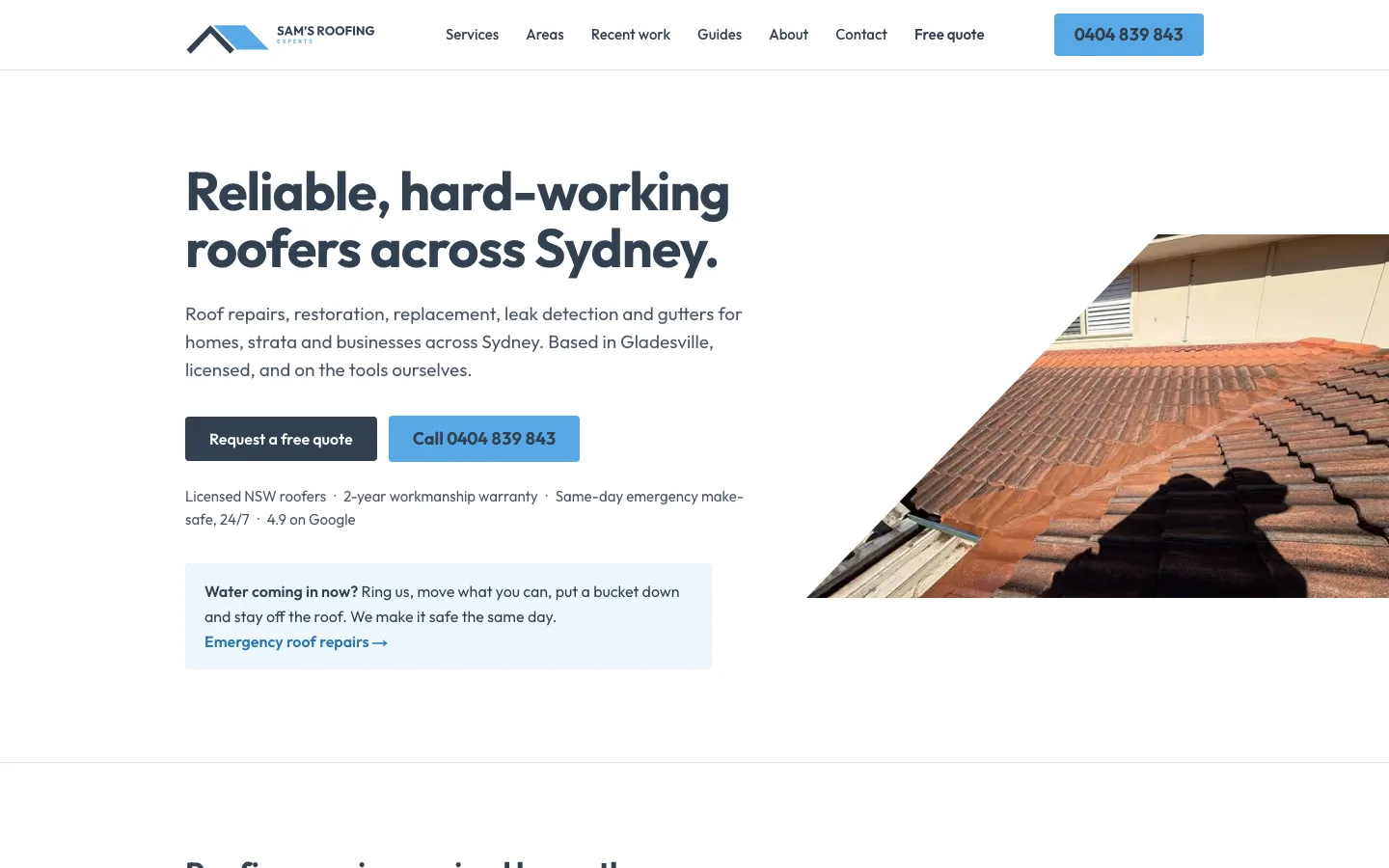
Sam’s Roofing Experts
From four pages to 130, with published price ranges. Sam's Roofing Experts is a four-person roofing crew in Gladesville. Their old website had four pages and every service was listed on one of them, so we rebuilt it as a 130-page search-led roofing website: a page for each service, a hub for each of nine Sydney regions, cost guides with published price ranges, the crew's own job photos and a free written-quote form. The site is built and launching on Sam's domain. We don't have measured results yet; we'll add them once the pages have been live long enough to compare properly with the old site. If you run a roofing business and want more calls from the suburbs you already work in, this is what we built and why.View case study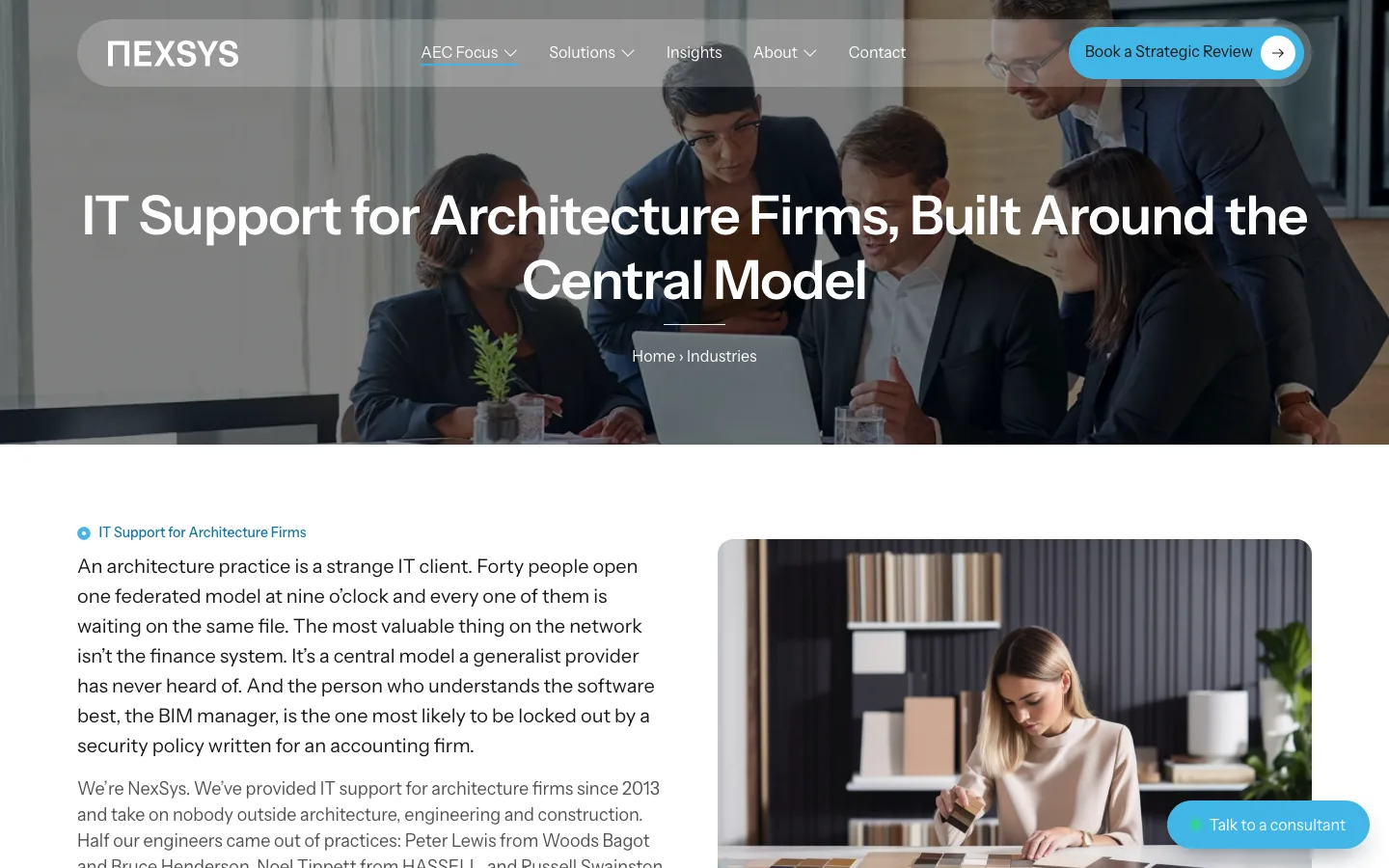
NexSys
NexSys provides IT support and design technology to architecture, engineering and construction firms across Australia and Asia Pacific. We planned and wrote a 27-page search programme to position it as the IT partner built for that industry, so an architecture practice searching for IT support for architects finds a page written for it. 22 of the 27 pages have been live on nexsysit.com.au since October 2026, and nine of the 27 rewrote pages that already existed instead of adding duplicates that would compete with them.View case study
Questions
What's the difference between a growth agency and a marketing strategy consultant?
A marketing strategy consultant typically hands over a plan. A growth marketing agency writes the plan and can also build and run it. We do both. The plan is written so your team or another partner can deliver it, and many clients carry on with us.
How much does a growth marketing agency cost?
Our strategy engagements start at $12,000 + GST, and ongoing Run work at $5,000 + GST a month. Everything is in the written proposal before you commit.
Do we have to engage you for the build afterwards?
No. The plan is yours. Many clients move into Build and Run with us, but nothing in the strategy depends on it.
What do you need from us?
A few hours with your leadership, access to your sales and marketing data, and someone who can answer questions quickly.
How long does a growth strategy take?
Typically 12 weeks. It depends on how many channels and systems are in scope, and the proposal states the timeline before we start.
Do you only work with Sydney businesses?
No. We're based in Sydney and work with businesses across Australia, in trades, healthcare and imaging, finance and lending, IT and managed services, care services and B2B SaaS.
Do you help with launching a new product or market?
Yes. That is go-to-market strategy: who it's for, what to say and how the launch is measured. Our go-to-market strategy guide walks through a worked example.
Who is behind CGS?
Raahul Anura, the founder. He started in big-three strategy consulting, then spent seven years running growth in-house at scale before founding CGS in Sydney in 2026. [Book a 30-minute diagnostic call →]